CAFS Report Reviews State Standards to Prevent Heat Illness Among Farmworkers
Though heat exposure occurs across industries, farmworkers are particularly vulnerable and more likely to die from heat-related stress. Long hours in exposed fields, limited access to shade and drinking water, and pressure to harvest quickly all contribute to their vulnerability to heat illness. Remote worksites can also delay access to critical medical care during emergencies.
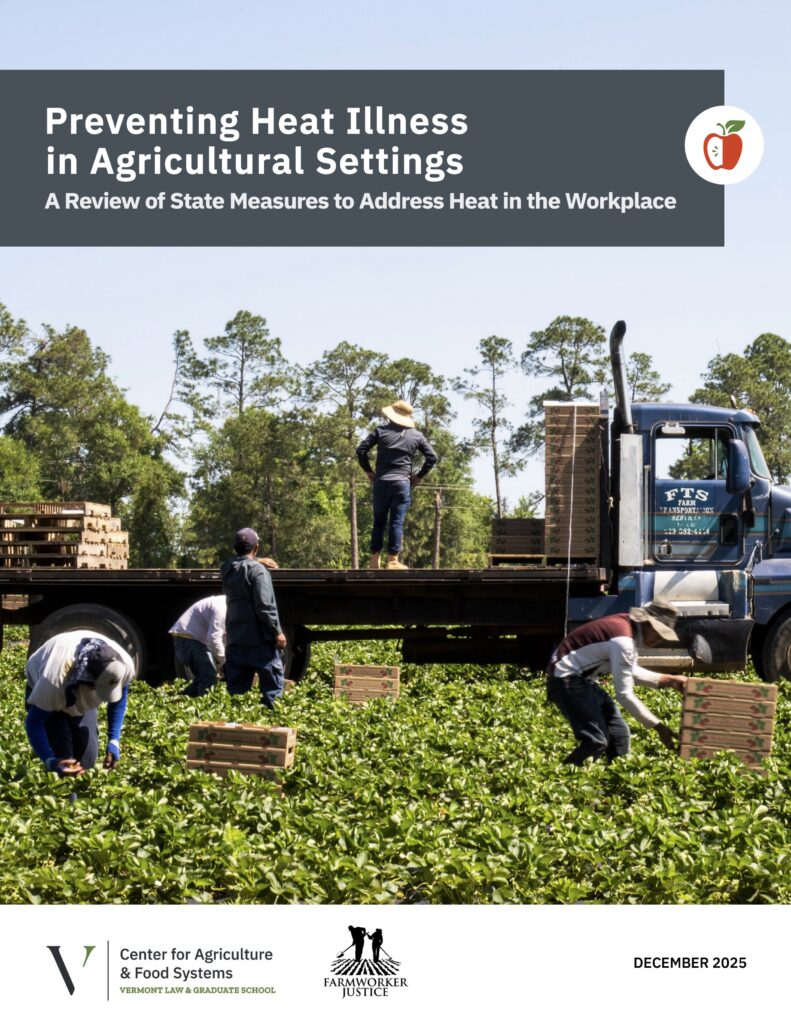
Preventing Heat Illness in Agricultural Settings
A Review of State Measures to Address Heat in the Workplace
A new CAFS report called “Preventing Heat Illness in Agricultural Settings: A Review of State Measures to Address Heat in the Workplace” examines state heat illness prevention rules that attempt to address the unique conditions that put farmworkers at risk. As policymakers across the country consider new protections, this resource provides recommendations for developing strong, enforceable heat illness prevention measures by comparing existing rules, highlighting lessons learned from early implementation, and outlining opportunities for improvement. Produced in partnership with Farmworker Justice, this report is designed to support lawmakers and organizations committed to protecting farmworker communities.
This resource was authored by Food and Agriculture Clinic Director Emma Scott, Director of Research and Senior Research Fellow Emily Spiegel, and CAFS Director Laurie Beyranevand JD’03, with support from Food and Agriculture clinicians Laura Ataa Agyekumhene LLM‘25, Kiel Parker JD‘25, Pius Joseph Ubenyi LLM’25, and Elijah Zwick JD’27, along with Alexis Guild and Rebecca Rosefelt of Farmworker Justice.