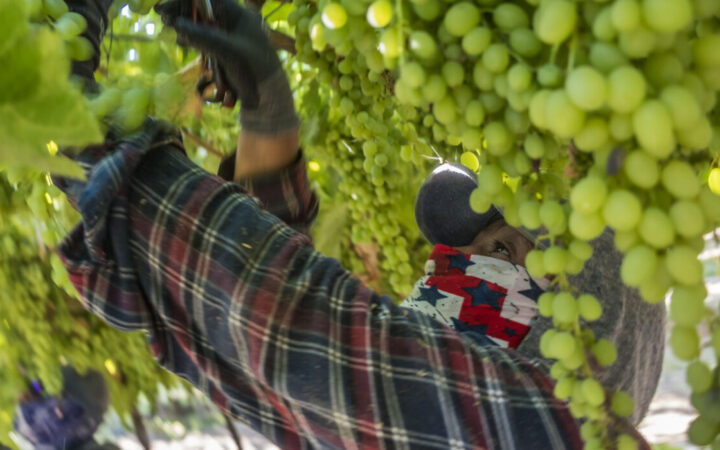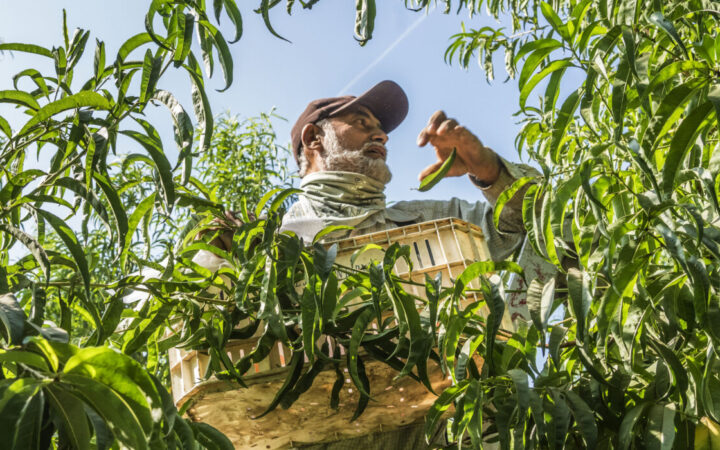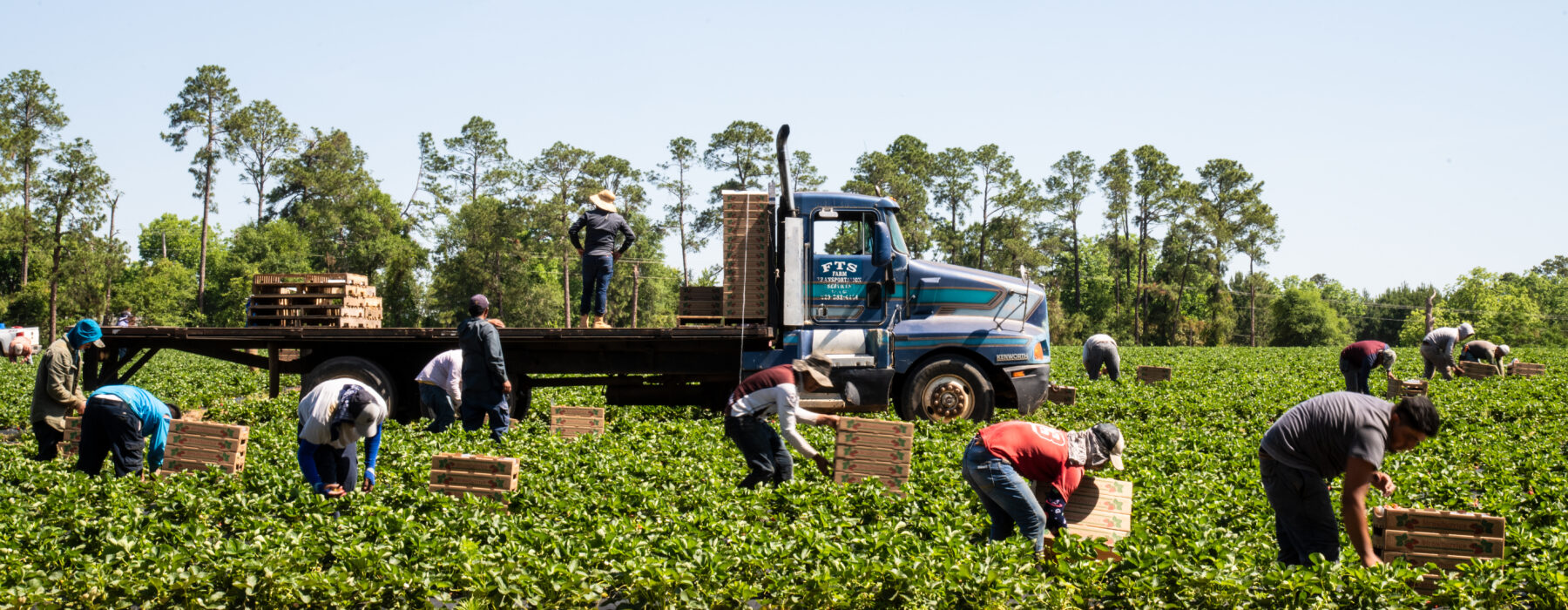
Though heat exposure occurs across industries, farmworkers are particularly vulnerable and more likely to die from heat-related stress. This resource examines state heat illness prevention rules that attempt to address the conditions that put farmworkers at risk.
Introduction
Heat stress is a serious, yet preventable, occupational hazard. It can lead to heat-related illnesses and physical injuries as the body struggles to regulate temperature during prolonged exposure to high environmental heat. Even in milder temperatures, workers can experience heat stress when engaged in strenuous physical activity due to the body’s creation of metabolic heat which then combines with environmental heat. These conditions range from relatively mild (e.g., heat cramps, swelling) to moderate (heat exhaustion, fainting) and severe (heat stroke, which can be fatal). Research using biometric devices has documented the connection between workers with core temperatures exceeding 100˚F and a high frequency of acute kidney injury, putting workers at risk of developing chronic kidney disease even without obvious symptoms of heat stress. One study has shown that the risk of injury due to heat stress is higher in states without workplace safety standards to address heat exposure.
Though heat exposure occurs across industries, agricultural workers are particularly vulnerable and are more likely to die from heat-related stress than workers in other industries. Agricultural work often occurs in exposed areas with limited access to water and shade. Pressure to harvest crops quickly limits the opportunity to rest and recover as needed. Remote work locations can also make it difficult to access medical services quickly enough to provide critical aid. Given farmworkers’ unique vulnerability to the effects of heat stress and the absence of federal workplace standards to address the issue, this resource focuses on state and local heat illness prevention rules relevant to agricultural workers. Its guidance, however, may be useful for general industry protections.
In August 2024, the Occupational Safety and Health Administration (OSHA) of the U.S. Department of Labor issued a notice of proposed rulemaking and request for comments on the agency’s proposed rule Heat Injury and Illness Prevention in Outdoor and Indoor Work Settings. As a new presidential administration transitioned into leadership, the rule remained pending. OSHA conducted public hearings on the pending rule in June and July 2025 and reopened the docket for additional comments from those who participated in the hearings. While it is uncertain whether the agency will proceed with enacting a rule, some industry advocates have urged OSHA to move forward with a pared down version that is more business-friendly and flexible. If OSHA moves forward, the final rule will likely differ significantly from the initially proposed version.
For those concerned with worker health and safety, there are opportunities to enact protections at the state and local level. Federal OSHA standards provide a baseline for worker health and safety protections, which allows states to enact protections that exceed federal requirements. They can do this either legislatively or administratively in some cases. Several states have already developed their own standards, which can serve as a template for developing standards in other states. Lessons learned in the implementation of these standards provide further instruction on how to strengthen these laws moving forward.
The sections in this resource aim to answer key questions that communities face when considering heat protection measures in their state:
- How does a rule get enacted? This section describes the process for enacting new rules.
- What are the core components of a heat illness prevention rule? This section describes the main elements common across heat illness prevention rules, notes some of the differences among existing rules, and makes recommendations.
- What further protections can be pursued? This section describes additional policies that will support the goal of preventing heat illness but either are less common among existing rules or would involve a policy change that likely falls outside the provisions of a heat illness prevention rule.
- What could the text of a rule look like? This section includes a template rule that communities and policymakers can use as a starting point for developing a draft proposed rule.
Acknowledgments
This resource was produced by the Center for Agriculture and Food Systems (CAFS) at Vermont Law and Graduate School. The lead authors are Emma Scott, Director of CAFS’s Food and Agriculture Clinic; Emily Spiegel, Director of Research and Senior Research Fellow; and Laurie Beyranevand, Director and Pescosolido Professor of Food and Agricultural Law and Policy; along with the following students in the Food and Agriculture Clinic: Laura Ataa Agyekumhene LLM‘25, Kiel Parker JD‘25, Pius Joseph Ubenyi LLM’25, and Elijah Zwick JD’27. This resource was written and produced in partnership with Alexis Guild and Rebecca Rosefelt of Farmworker Justice.
We thank the following people for reviewing and providing guidance and feedback on this report: Anastasia Christman (National Employment Law Project), Juanita Constible (NRDC), Jeannie Economos (Farmworker Association of Florida), Alexis Guild (Farmworker Justice), Anne Katten (California Rural Legal Assistance Foundation), Dominique O’Connor (Farmworker Association of Florida), Mayra Reiter (Earthjustice), Rebecca Rosefelt (Farmworker Justice) and Ernesto Ruiz (Farmworker Association of Florida).
Finally, this report would not have been possible without the tremendous editing, production, and communications support of the Center for Agriculture and Food Systems, including Lihlani Nelson, Deputy Director and Senior Researcher, and Austin Price, Communications Manager.
Suggested Citation
Ctr. for Agric. & Food Sys., Preventing Heat Illness in Agricultural Settings: A Review of State Measures to Address Heat in the Workplace (2025), https://cafs.vermontlaw.edu/resource-library/preventing-heat-illness-in-agricultural-settings.