A Tale of Four Cities: Case Studies Highlight Local Policy Efforts to Support Urban Agriculture
Throughout the past year, the Center for Agriculture and Food Systems (CAFS) at Vermont Law and Graduate School has published four case studies to highlight cities where community-led urban agriculture initiatives have engaged with local policy to support farmers and gardeners. Co-authored by CAFS Visiting Assistant Professor Liz Turner and former CAFS interns Seth Israel and Grace McGuire JD’27, these case studies on Philadelphia, Detroit, New Orleans, and Phoenix explore each city’s agricultural histories, food policy networks, and their behind-the-scenes policy development processes. Each case study corresponds with one of the major topics discussed in CAFS’s “Urban Agriculture and Innovative Production: A Guide to Local Policy.”
These cities are listed among the 17 “urban agriculture hubs” identified by the U.S. Department of Agriculture (USDA). Over the last three years, CAFS’s Urban Agriculture and Innovative Production Policy Project, led by Turner and CAFS Deputy Director and Senior Researcher Lihlani Nelson, has conducted a policy scan of these hubs to identify and highlight policy strategies for urban agriculture that could be replicated across the country. “While each city’s historical and contemporary context is unique,” says Turner, “we aimed to highlight proven policy strategies that may help foster urban food production in cities across the country.”
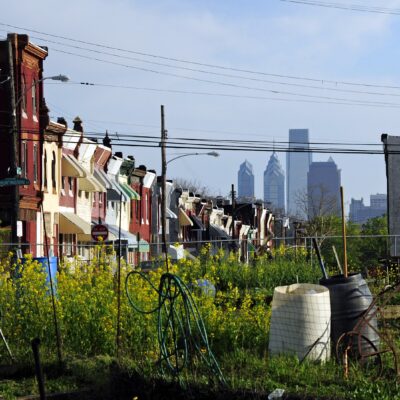
Philadelphia: "Farming Without Permission" »
Community gardens have a long history in Philadelphia and have become essential sources of the city’s local food. In 2008, a University of Pennsylvania study estimated that they produced $4.9 million worth of summer vegetables, “more food than all of the city’s farmers markets and urban farms combined.” But many of them operate on abandoned lots, often without title or permission from landowners. The case study “Farming Without Permission” explores how the city’s community garden network successfully reformed Pennsylvania’s adverse possession law to make it easier for longstanding gardeners to secure permanent ownership of the land they cultivate. More »
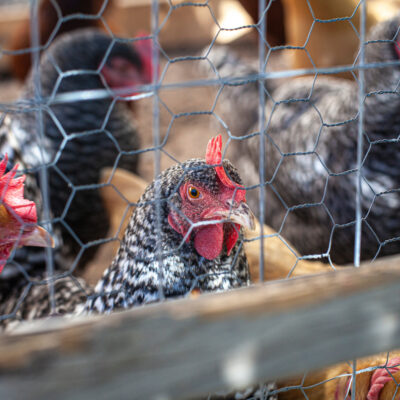
Detroit: "City Chickens and Backyard Bees" »
A decade-long battle for clear zoning guidelines around urban animal keeping ended in 2025, with an updated animal keeping ordinance that allows Detroit gardeners to keep chickens, ducks, and honeybees within city limits. The case study “City Chickens and Backyard Bees” tells the story of how a group of city officials and organizations engaged with the community, gathered stakeholder input, and addressed resident concerns to clear up a legal gray area in Detroit’s zoning code to support locally grown food. More »
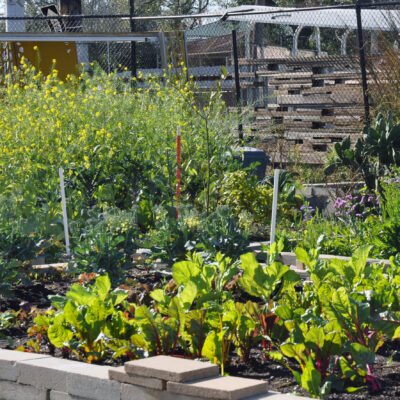
New Orleans: "Connecting Growers with City Government" »
The age-old farmers’ dilemma: farming is time consuming, and so is navigating complicated bureaucratic systems each time you need to apply for a permit or ask for support from the city. The case study “Connecting Growers with City Government” shows how, in New Orleans, urban producers grew tired of having no clear point of contact for local agricultural issues, which often resulted in unnecessary code enforcement tickets and overpaying for city services. So, in 2022, a group of New Orleans farmers and nonprofit organizations banded together to communicate the need for a point person in city government. Their voices were heard, and in 2024, the City of New Orleans hired its first “urban agriculture liaison.” More »
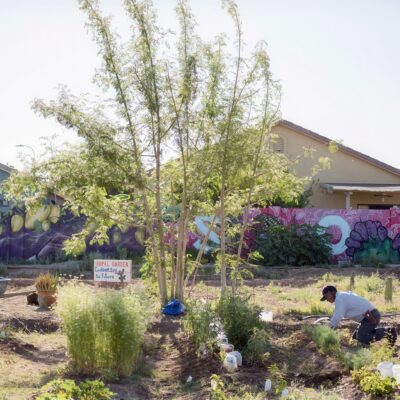
Phoenix: "Cleaning Up Contaminated Soil" »
As Phoenix grew rapidly throughout the twentieth century, South Phoenix became the site of its landfills and the city’s first sewage processing plant, among flour mills, brick factories, and other types of industry. In recent decades, South Phoenix residents have wanted to revitalize many of these properties to create space for local food production. But cleaning up soil contamination is a costly and high-risk hurdle. The case study “Cleaning Up Contaminated Soil” shows how the city used a $400,000 EPA Brownfields Assessment Grant to kickstart efforts to transform former industrial land into spaces to safely grow food. More »
Learn more about the Urban Agriculture and Innovative Production Policy Project.