This case study explores how Detroit’s 2025 animal keeping ordinance legalized a limited number of backyard chickens, ducks, and honeybee hives after years of community engagement and stakeholder input. It examines how the ordinance resolves a longstanding legal gray area, supports local food production, and offers lessons for other cities seeking to support urban agriculture through zoning reform.
Key Points
- In 2025, Detroit updated its zoning code to explicitly allow residents to keep a limited number of chickens, ducks, and honeybee hives within city limits.
- This new animal keeping ordinance resolves a legal gray area in which urban farmers and gardeners who kept poultry and bees were vulnerable to penalties through nuisance complaints.
- The new ordinance resulted from a decade-long policymaking process that involved community engagement, stakeholder input, and thorough research to address resident concerns.
- In a city with high rates of food insecurity, this ordinance supports urban farmers’ and gardeners’ efforts to produce locally grown food.
Why Does Zoning Matter for Urban Agriculture?
Zoning is a system of land use regulation that municipalities use to exercise control over how both private and public property is used. Zoning regulation usually takes the form of municipal ordinances passed by a city council in accordance with a comprehensive plan that outlines a strategic vision for growth and development. These ordinances can separate incompatible land uses but can also impose restrictions that undermine community needs. For instance, zoning codes often limit the scale of allowable farming activities in urban neighborhoods. In many cities, home gardeners and commercial-scale urban farmers contend with zoning barriers that restrict food production in urban environments. As public interest and involvement in urban agriculture grows, updates to comprehensive plans and zoning codes can support the efforts of urban producers and validate the important role of urban agriculture.
The Problem
Before January 2025, Detroit farmers and residents were vulnerable to legal consequences for keeping farm animals—even a small flock of chickens. Though Detroit’s zoning code included ordinances allowing vegetable and fruit production throughout the city, raising livestock was forbidden.
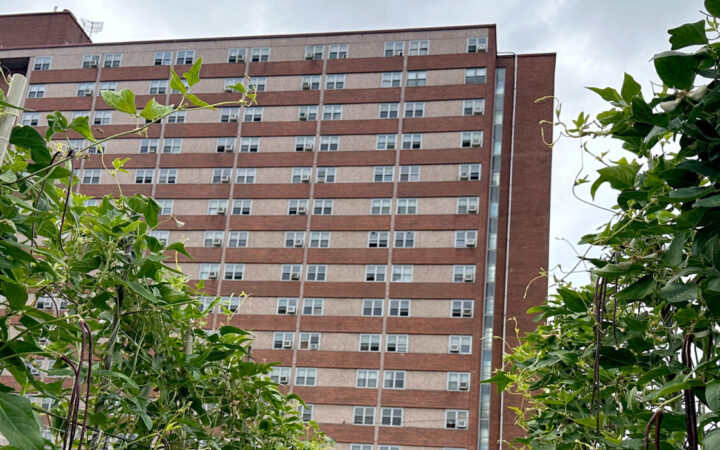
For decades, the city of Detroit has struggled with two critical issues: large quantities of vacant land and high rates of food insecurity. Over the second half of the twentieth century, Detroit’s famous automotive industry declined and population flight to the suburbs accelerated. Detroit lost nearly two-thirds of its residents between 1950 and 2020. Financial crises led to the foreclosure of nearly one in three of all properties in Detroit from 2005 to 2015. By 2012, a third of Detroit’s land area—40 square miles—was vacant. This dramatic loss of property and income tax revenue caused the city to become insolvent and ultimately to declare bankruptcy in 2013. This heavily impacted food access for communities that remained in the city as grocery store chains largely pulled out of the city center, leading to a severe lack of local grocery options. Census data from 2020 revealed that over 33.8 percent of city residents lived below the federal poverty line. Recent estimates place the percentage of food-insecure Detroiters at 69 percent.
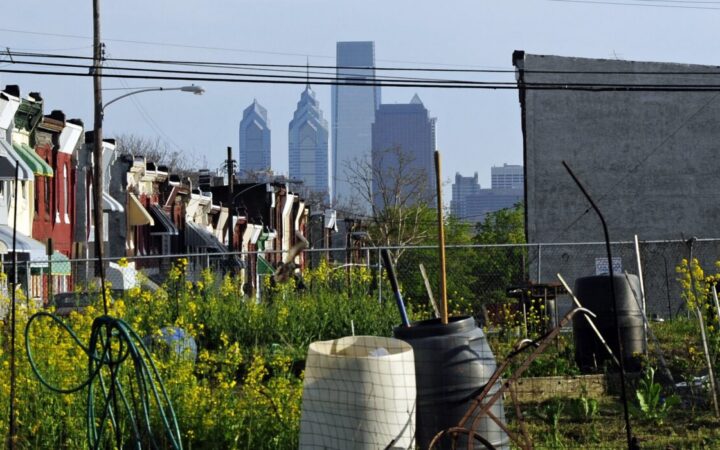
Urban farmers and gardeners in the city have long realized that they can use the city’s vacant land to produce food for their communities. In the 2000s and 2010s, organizations like Keep Growing Detroit and the Detroit Black Food Sovereignty Network began encouraging Detroiters to grow their own food through information hubs like the Garden Resource Program and organizations like the Detroit Food Policy Council. As urban agriculture proliferated over the 2010s and 2020s, quasi-governmental organizations like the Detroit Land Bank and community institutions like the Detroit Black Farmer Land Fund stepped in to provide technical and financial assistance to help urban farmers access land.
Due to the success of these land access initiatives and the persistence of the urban agriculture community, Detroit is known as a leader in the modern urban agriculture movement. Today, Detroit has over 2,200 active gardens and farms. Some operations, like Oakland Avenue Farms, D-Town Farms, and Beaverland Farms, span multiple acres. In 2013, the city enacted ordinances to include growing produce and other farming practices like on-site sales and composting in the city’s zoning code as legitimate land uses. However, raising animals—such as chickens, ducks, or bees—remained formally prohibited anywhere beyond educational facilities.
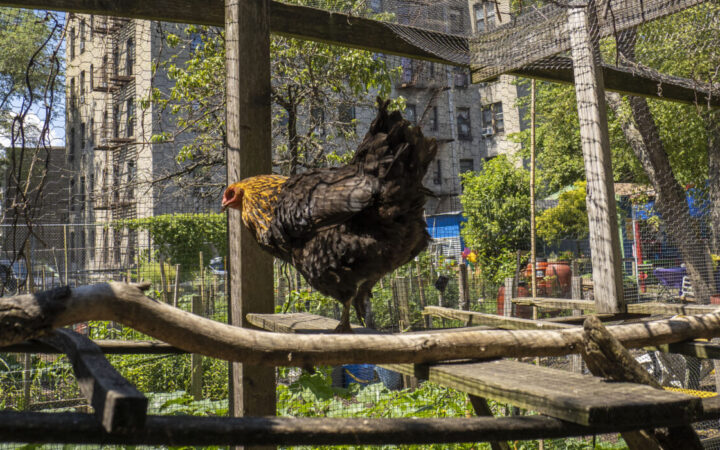
In practice, many producers in Detroit raised chickens, bees, or other farm animals with relatively few nuisance complaints and little enforcement—the city did not regularly follow through with investigating complaints or issuing fines. However, since Detroit’s ordinances had not yet caught up with the realities of the city’s growing urban agriculture sector, animal-keeping producers were vulnerable to complaints from neighbors or unusually vigorous code enforcement that could lead to legal consequences, including animal control fines and the seizure of any offending animals.
The Policy Solution
Urban farmers and city staff pushed to allow animal husbandry as a permitted use in urban agriculture zoning to clarify the legal landscape for Detroit farmers and gardeners.
The 2025 animal keeping ordinance amended two chapters of the Detroit Municipal Code: Chapter 50: Zoning and Chapter 6: Animal Care Control and Regulation. The ordinance includes the following definitions, standards, and license requirements.
Definitions
- “Animal husbandry and beekeeping” is defined as: “the keeping of certain urban farm animals and domestic honeybees, … for personal consumption or utilization of agricultural products, such as eggs, meat, or honey.”
Number and Type of Animals Permitted
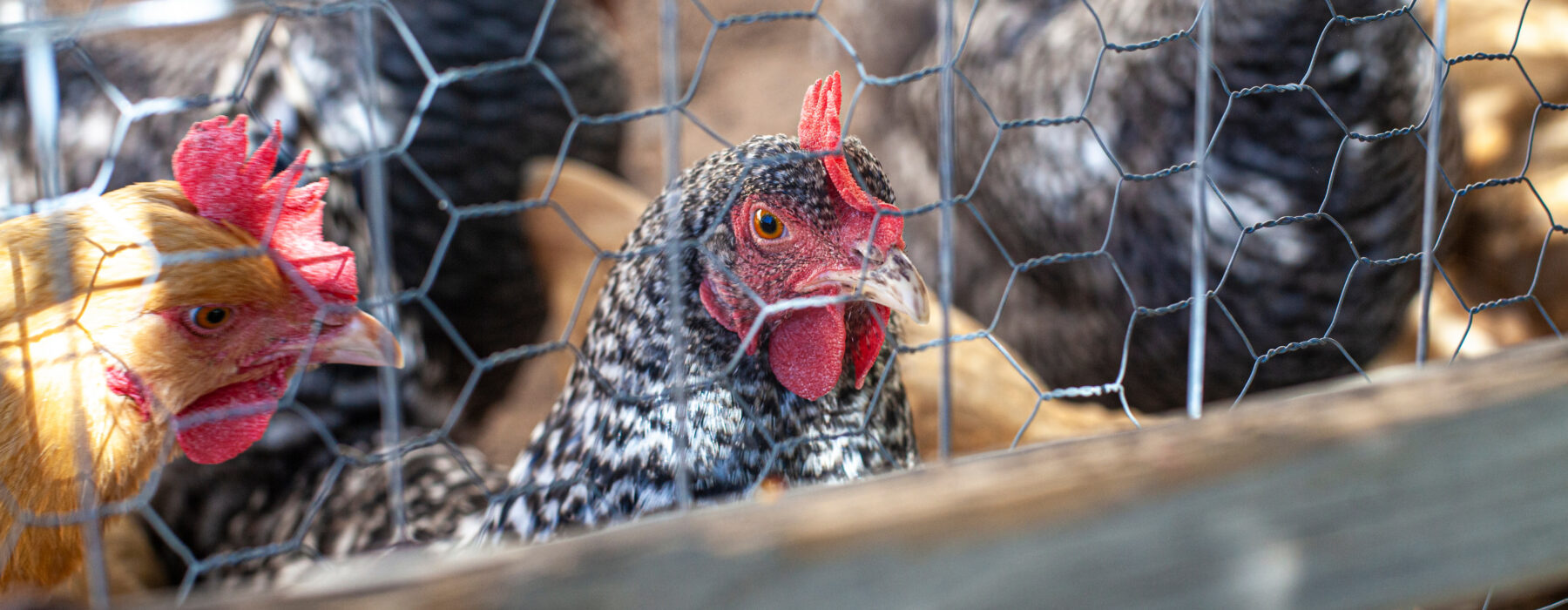
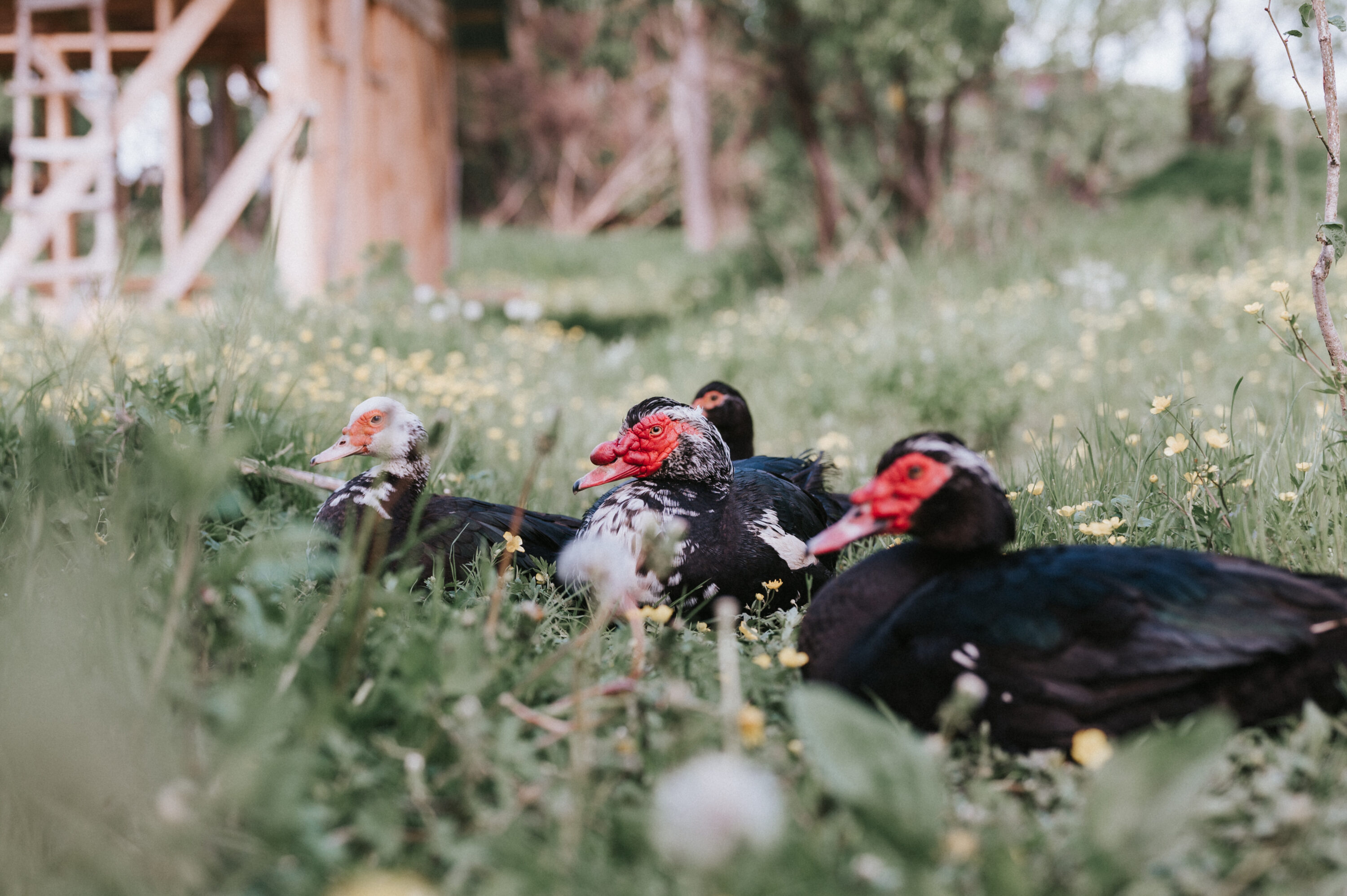
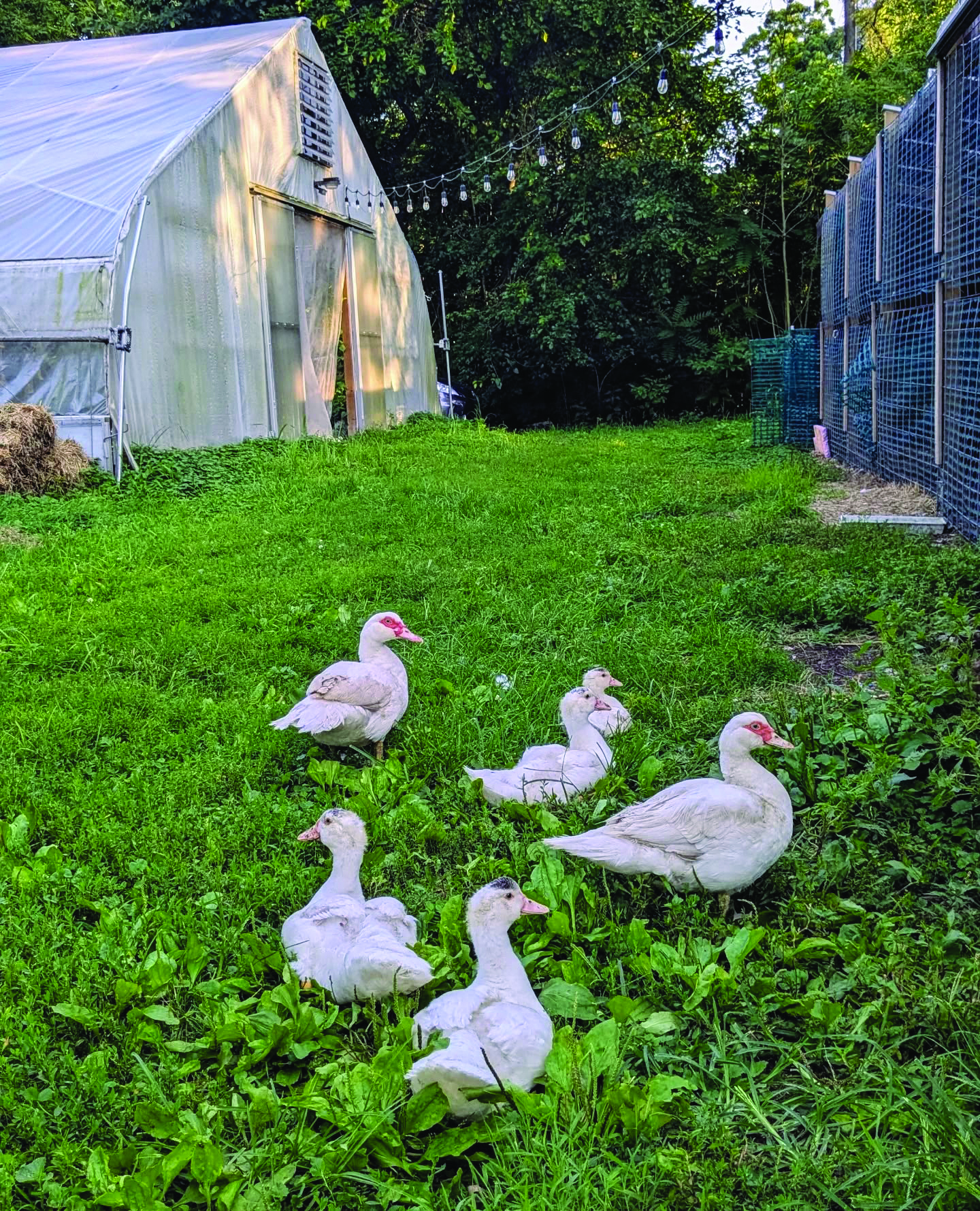
- For residential use, the maximum number of ducks and hens (roosters are not permitted) is eight (8). The maximum number of honeybee hives is two (2).
- For agricultural uses like urban farms and urban gardens, the maximum number of ducks and hens is twelve (12), and the maximum number of hives is four (4). If the urban garden is a half-acre or more, the garden can have up to six (6) honeybee hives. An urban farm exceeding one acre can have up to eight (8) honeybee hives, with the option to add an additional hive for every one acre.
Specific Use Standards
- Animal husbandry and beekeeping is a permissible accessory use in most zoning districts.
- Animal husbandry and beekeeping is a principal use for certain municipal and educational entities, who are exempt from limits on the number and types of animals.
- Licenses are required for all animal husbandry and beekeeping.
What is a Principal Use and an Accessory Use?
A principal use is the zoning term for the main or primary use of the lot. Zoning codes will usually contain “use standards” that apply to principal uses, which are meant to ensure the uses are compatible with the area and the comprehensive plan.
An accessory use is conditional to a principal use and cannot be established without a pre-existing principal use. For example, backyard animal keeping as an accessory use in a residential zoning district may only be permissible if a house already exists on the lot as the principal residential use.
Accessory Use Standards
- Animal husbandry and beekeeping is a permissible accessory use to an urban farm (over one acre) or urban garden (up to one acre).
- Shelter and enclosure spaces for chickens and ducks must be in the rear of the principal structure (backyard of the house) and are subject to certain size and setback requirements.
- Rear yards used for animal husbandry and beekeeping must have (1) fencing, if adjacent to a home, and (2) opaque screening at least 4 feet tall.
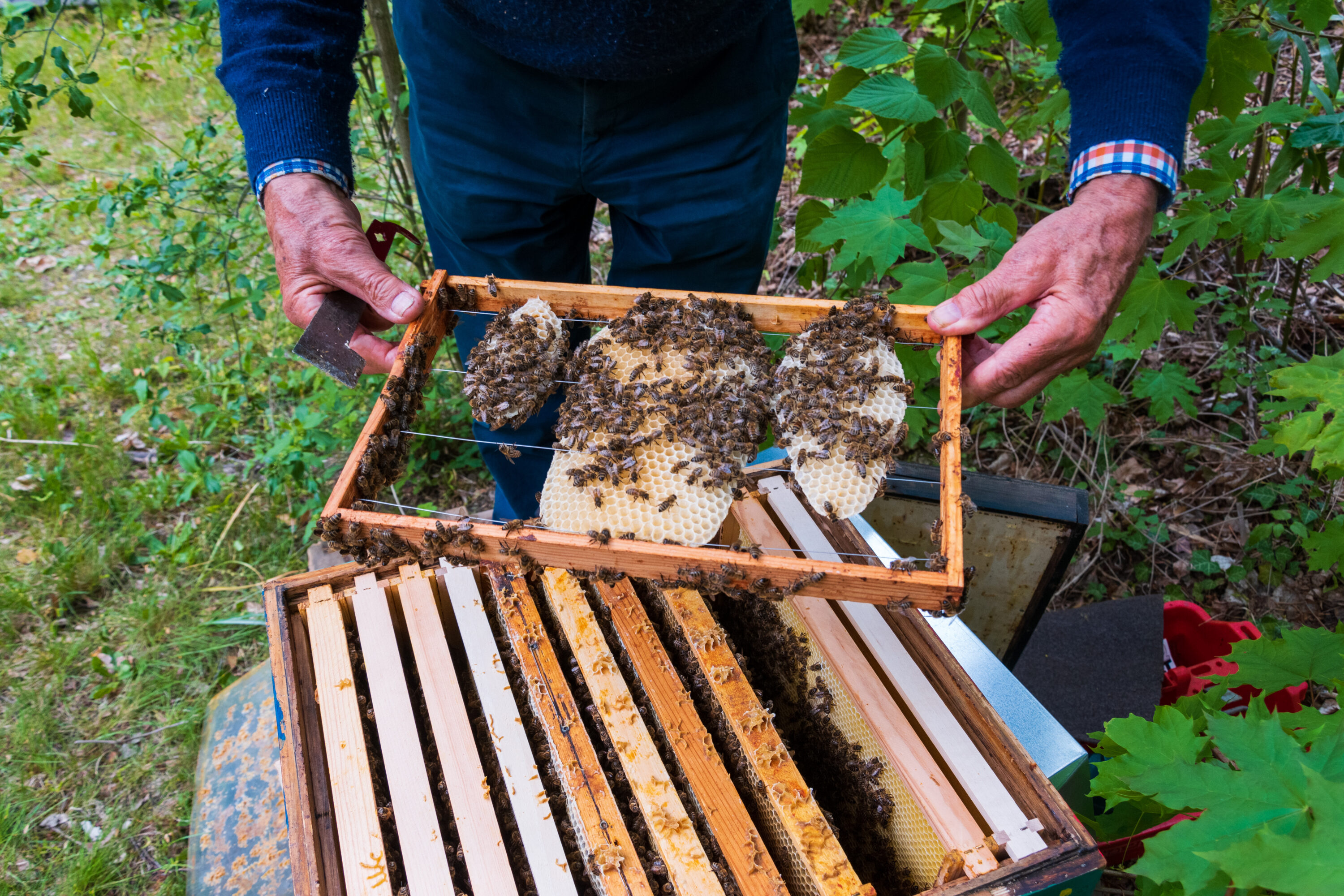
- Beehives must be located twenty-five (25) feet back from property lines unless a flyway barrier of at least six feet is included. A flyway barrier is a fence, wall, or hedge next to a hive that forces bees to fly upward from the hive, minimizing their travel into neighboring areas.
Licensing Requirements
- Interested parties must fill out a simple application for an Animal Husbandry and Beekeeping License through the Detroit Animal Care and Control Department.
- Applicants must submit a $50 licensing fee, renewed annually.
- Applicants must notify their neighbors of their intent to keep animals or bees.
- Applicants must await approval by the Buildings Safety Engineer and Environmental Department for design review, as well as the Detroit Animal Care and Control Department.
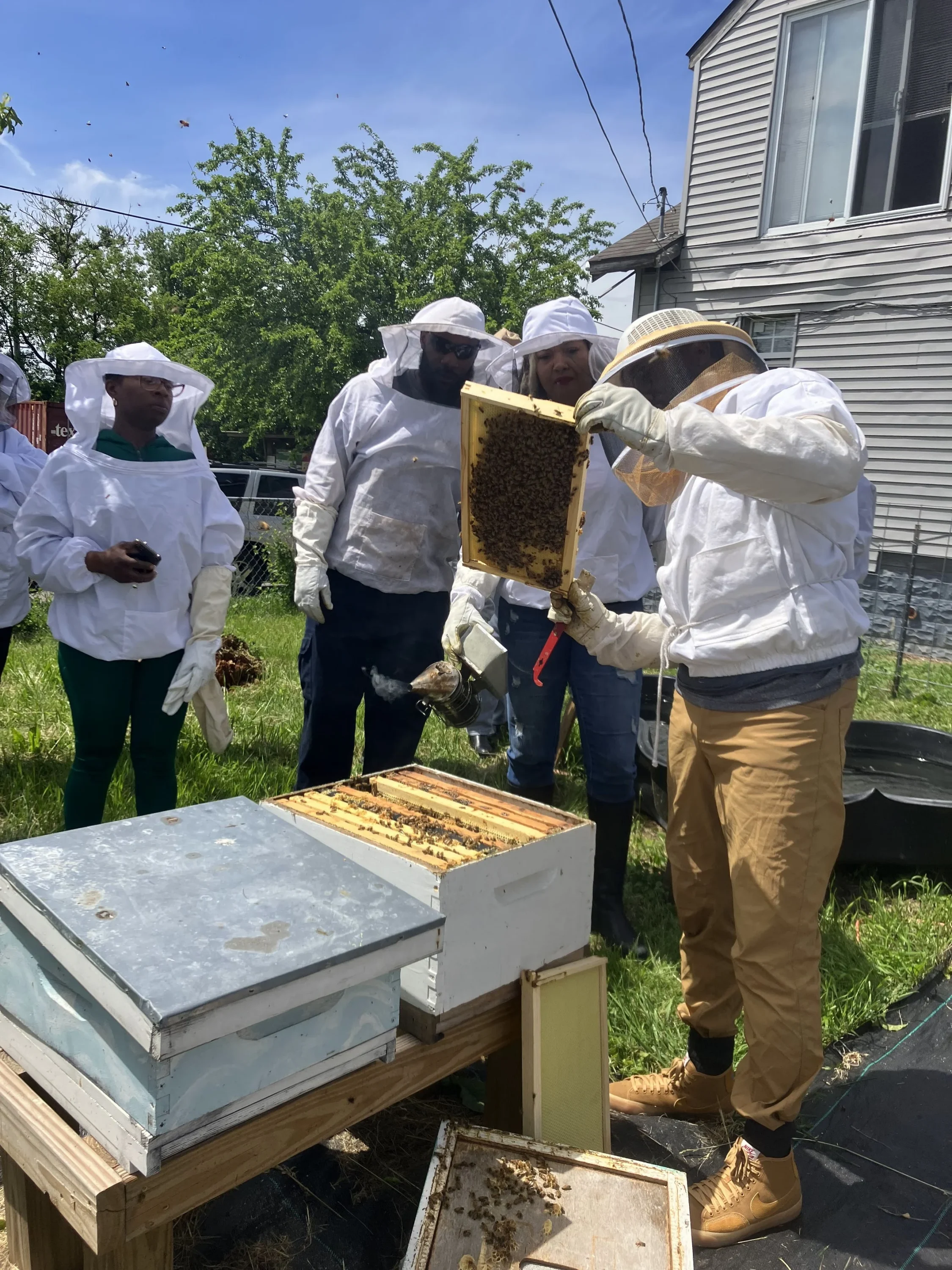
Two key programs support the new animal keeping ordinance. First, Urban Agriculture Division staff hold weekly office hours to assist those interested in applying for a license. Second, a community group called the Animal Guild serves as a support group for animal-raisers seeking education and best practices.
The Policy Development Process
Detroit’s animal keeping ordinance resulted from a deliberate, decade-long process with significant input from stakeholders, including city planners and community organizations.
In 2013, former city planner Kathryn Lynch Underwood proposed an “Urban Livestock Ordinance” that would have allowed residents to legally keep goats, rabbits, turkeys, chickens, ducks, and honeybees. While some animal raisers thought these species would be helpful for food production, other community members were uneasy with the broad scope of the proposal. Critics of urban animal keeping voiced concerns about excess noise and waste. Council member James Tate supported the ordinance, but he acknowledged that these community concerns were grounded in the belief that people who choose to live in the city should not have to contend with their neighbors’ agricultural activities, which they believe are better suited for rural spaces. These misgivings were echoed within the city council, and fear of potential nuisance claims prompted the council to table the topic.
Following the ordinance’s failure in 2013, the city council did not touch the topic of animal husbandry despite continued community organizing. Urban animal keeping remained a legal gray area. Some commercial urban farmers and backyard homesteaders persisted in keeping farm animals, largely chickens and bees. The city’s enforcement of the ban on animal keeping was complaint-driven; an Animal Control visit depended on whether a neighbor or passerby made a complaint to the city. Ultimately, some animal husbandry practitioners decided to wait for a code update to raise animals, while others decided to take the risk. When the ordinance eventually passed, the city council’s decision rested in part on the low rate of neighbor complaints and subsequent citations during this time.
Meanwhile, the City Planning Commission (CPC) and several community organizations continued efforts to gather community support for urban animal keeping. In November 2015, the CPC hosted two “Listen and Learn” engagement sessions that sought input from residents about passing a new version of the failed 2013 ordinance. In 2016, stakeholder focus groups led by Underwood solicited and addressed existing community concerns. Community organizations like Keep Growing Detroit, Georgia Street Community Gardens, and FoodPLUS Detroit served as networking hubs for animal-keeping supporters until the topic could be reevaluated by city council.
Following the election of a new slate of city councilors with renewed interest in supporting urban agriculture, the animal keeping ordinance was brought back to life in 2021. The CPC began drafting new ordinance language that removed the goats, turkeys, and rabbits that had incurred so much initial controversy and set more specific parameters for beekeeping. By that point, Kathryn Lynch Underwood had retired, so city planner Kimani Jeffrey took charge of the drafting and researching process alongside city policy analysts, animal keepers, and council members.
Between 2021 and the ordinance’s ultimate passage in 2024, the Detroit Board of Commissions tasked the Detroit Food Policy Council with carrying out the public engagement process required for presentation to city council. Ultimately, four city-wide meetings influenced the CPC’s use of language in the final ordinance. The number and type of animals in the proposed language was a product of monthly brainstorming sessions convened by Patrice Brown, then-chair of the Detroit Food Policy Council, and Keep Growing Detroit.
The CPC led the process of drafting the final ordinance language and garnering community engagement. Other city departments, including the office of City Council President Pro Tem James Tate, Animal Care and Control, the Law Department, the Planning and Development Department, and the Buildings, Safety Engineering, and Environmental Department supported the process through an internal working group. The internal working group’s collaborative effort with the CPC further refined the ordinance’s language and scope. For example, the Animal Care and Control Department produced data showing that from 2020 to 2023, citations related to chickens, ducks, and honeybees made up less than one percent of all citations related to domesticated animals.
The Animal Care and Control Department produced data showing that from 2020 to 2023, citations related to chickens, ducks, and honeybees made up less than one percent of all citations related to domesticated animals.
The CPC voted on May 2, 2024, to approve proposed amendments to Chapter 50 and Chapter 6 of the city code. Next, the CPC compiled a thorough recommendation proposal to city council for the animal keeping ordinance. This proposal was submitted to Detroit City Council by the CPC director, staff members, and chairperson Donovan Smith on July 26, 2024.
The CPC’s aim was to “(1) Encourage practitioners to conform to a uniform policy of best practices and rein in current activity, (2) protect the health, welfare and safety of the community, (3) decriminalize animal and bee keepers, and (4) facilitate a more sustainable and localized food system.” The CPC’s recommendations included statistics from several studies related to the impacts of urban livestock keeping. Among others, a 2015 study coauthored by researchers at Michigan State University and FoodPLUS Detroit indicated a positive correlation between adequate support and training for urban livestock keepers and public approval of urban animal keeping. Acting on this information, the CPC coupled the proposed ordinance with a proposal for educational programming from the Detroit Animal Husbandry Guild and support from the city’s existing inter-departmental Land Based Projects initiative.
While many community proponents envisioned fresh eggs as the central benefit to backyard animal keeping, there was also interest in meat production. The CPC addressed a community concern around animal slaughtering in residential areas by prohibiting on-site slaughter in the proposed ordinance. During an October 2024 meeting for the Detroit City Council Public Health and Safety Committee, CPC staff, Law Department staff, and community stakeholders presented on the research and methodology of the proposed animal keeping ordinance. This presentation included referrals to regional slaughterhouses as an accessible option for animal keepers within the city. The CPC’s dedication to community engagement through public hearings and community meetings contributed significantly to public support for the ordinance. The CPC received letters of support from all seven of Detroit’s council districts and a support petition with 555 signatures. These letters and signatures stood out against the single letter of opposition received by the CPC, and helped bolster the ordinance’s political momentum within city council.
Detroit City Council voted on the animal keeping ordinance on November 12, 2024, and the ordinance passed by a vote of 5-3. The law went into effect on January 31, 2025.
Developing the New Animal Keeping Ordinance
2013
Former city planner Kathryn Lynch Underwood proposed an “Urban Livestock Ordinance” that would have allowed city residents to keep goats, rabbits, turkeys, chickens, ducks, and bees. City council tabled the ordinance over nuisance concerns.
2015-2016
The City Planning Commission (CPC) hosted “Listen and Learn” sessions to hear input from residents about the failed ordinance. Keep Growing Detroit, Georgia Street Community Gardens, and FoodPLUS Detroit built animal keeping support networks.
2016-2021
City officials took no further action on the animal keeping ordinance, but planning staff and Detroit farmers and gardeners kept the idea alive.
2021
Underwood retired and handed the ordinance over to city planner Kimani Jeffrey, who began drafting an ordinance that narrowed the scope to chickens, ducks, and bees.
2021-2024
The CPC and Detroit Food Policy Council engaged with the public and city departments to shape the language of the ordinance.
July 2024
The CPC submitted the proposed animal keeping ordinance to city council with 72 letters of support from all seven of Detroit’s council districts and a support petition with 555 signatures.
November 2024
City council voted and passed on the animal keeping ordinance.
January 2025
The new ordinance went into effect, allowing Detroiters to keep chickens, ducks, and honeybees within city limits.
Anticipated Policy Impact
Detroit’s animal keeping ordinance is expected to bring overdue clarity to a legal gray area. Due to the small number of permitted animals, the main beneficiaries of the zoning amendment are homestead-scale backyard poultry raisers and beekeepers.
The ability to raise even a small number of animals in the city is expected to increase access to fresh and affordable food for many Detroiters. By legalizing the practice of poultry and beekeeping for food production, the new ordinance gives residents greater control over their food supply. However, urban producers on a commercial scale will not feel much of an effect. The legalization of keeping up to twelve chickens/ducks and four beehives does little to meet the production demand of a commercial-scale farm. As current Director of the Office of Sustainability Tepfirah Rushdan has noted, “[W]e’re not talking about chicken farms coming to the city. We’re talking about allowing a limited number—specifically, eight chickens or ducks—under what’s termed as an accessory use. We’re talking about providing security for families in a very conservative way.”
While this ordinance is a starting point, some Detroit farmers still see a need for animal keeping on a commercial scale. Many farmers already have the operational capacity and know-how to raise livestock in a way that complies with other code regulations but lack permission from city government. In the future, a legal pathway for commercial-scale livestock raising that accounts for residents’ concerns within the city of Detroit could further strengthen the urban food system.
“Backyard egg, poultry, and honey production allows our communities to have control over some food sources, rather than relying on distant supply chains. The next critical step for Detroit is to allow farms in the city to keep chickens, bees, and other livestock in greater numbers. Without provisions for larger-scale animal agriculture, farmers like me are limited in our ability to strengthen the local food economy, create jobs, and provide nutrient-dense foods direct to our neighborhoods.”
— Brittney Rooney, Beaverland Farms
Lessons Learned
- Dedicated residents and organizations can spark necessary community support for zoning code amendments by organizing and guiding individual community members through formal policymaking channels.
- Community hearings and opportunities for public engagement are crucial to drafting proposed ordinance language. Hearing public concerns and addressing them with targeted research is helpful in gaining community trust and presenting a well-vetted proposal to city council.
- Zoning code amendments take patience and persistence. Though rejection of a proposed amendment may be discouraging, it does not eliminate the possibility of passage in the future. Detroit’s decade-long process for adopting the animal keeping ordinance is proof that continued effort can push local government to amend zoning laws to benefit urban agriculture.
- Framing carefully regulated urban animal keeping as a benefit for public health may be helpful in convincing city governments to adopt zoning code amendments.
Acknowledgments
This resource was produced by the Center for Agriculture and Food Systems (CAFS) at Vermont Law and Graduate School (VLGS). It was authored by Grace McGuire JD’27 and Liz Turner, with editorial and production support from Laurie Beyranevand JD’03, Lindsey Connolly MELP’11, Lihlani Nelson, and Austin Price; and designed by Jeff Wainer of Vermont Design Collective. This resource was reviewed by project advisory group members Anita Adalja (Ashokra Farm/Not Our Farm), Andrea Clark, Nelson Hawkins (We Grow Farms/Ujamaa Farmer Collective), Christian Kanlian (The Urban Assembly School for Green Careers), Amanda Karls (Foodvocate LLC), Mina Seck (SPROUT), Molly Stanek (The Aquaponics Association), and Latha Swamy (City of New Haven); external reviewer Erin Preston Johnson; and staff from the USDA Office of Urban Agriculture and Innovative Production, Markus Holliday and Sean Potts. The findings and perspectives expressed in this resource are solely attributable to the authors.
This case study is part of a series of resources on legal topics related to urban agriculture and innovative production. It was produced with support from the Office of Urban Agriculture and Innovative Production at the U.S. Department of Agriculture. View the whole project at cafs.vermontlaw.edu/projects/urban-agriculture-and-innovative-production.
Suggested Citation
Ctr. for Agric. & Food Sys., City Chickens and Backyard Bees: How Detroit’s Animal Keeping Ordinance Helps Urban Farmers Produce Locally Grown Food Without Breaking the Zoning Code (2026), https://cafs.vermontlaw.edu/resource-library/city-chickens-and-backyard-bees.