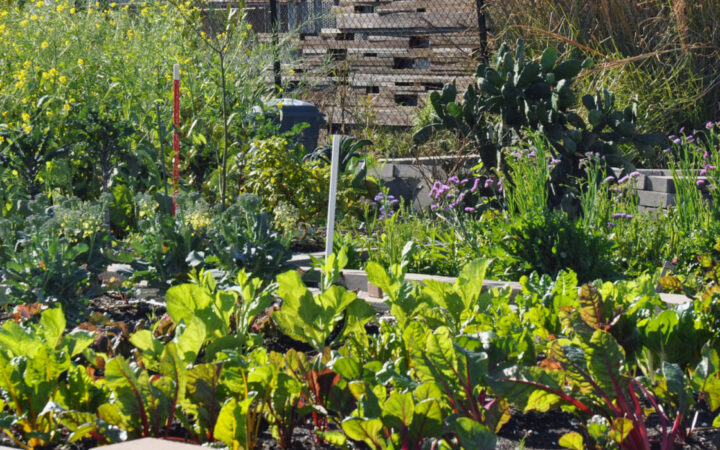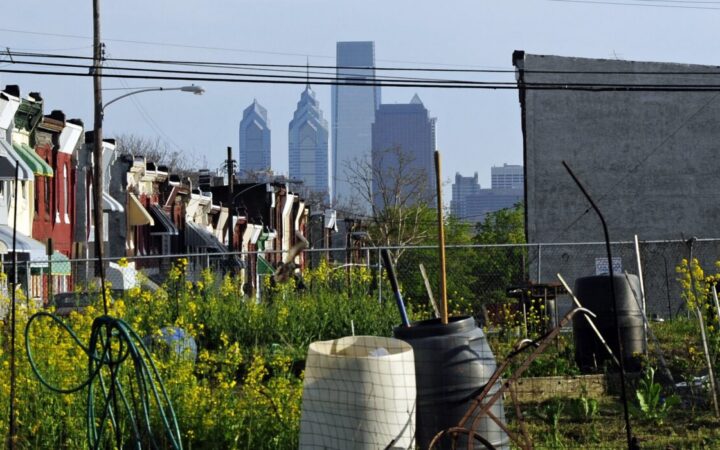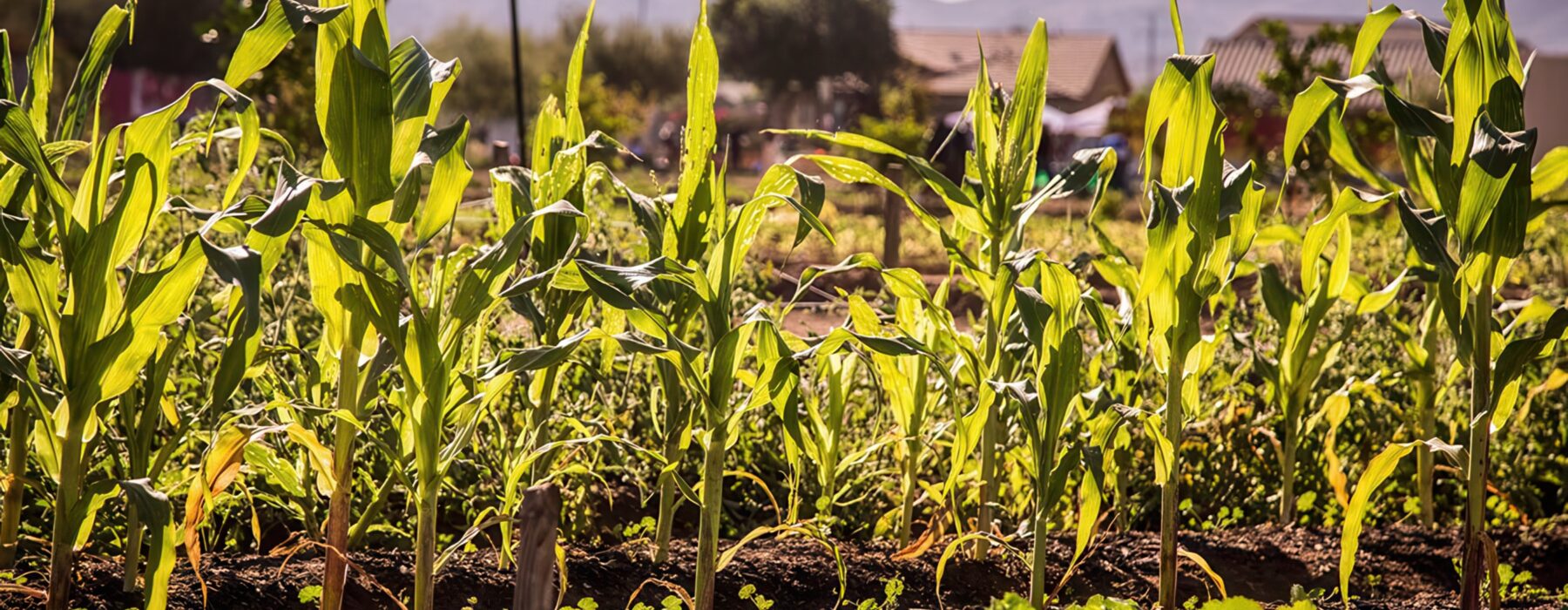
This case study examines how Phoenix’s Office of Environmental Programs accessed state and federal brownfields funding for site assessment and cleanup planning to help turn unused lots in South Phoenix into suitable land for farms, community gardens, and food hubs.
Key Points
- Brownfields are areas of land that are or might be contaminated with hazardous substances from previous uses, such as landfills, gas stations, or manufacturing facilities. The contamination impacts the land’s potential for development or use.
- The Environmental Protection Agency (EPA)’s Brownfields and Land Revitalization Program allows state, local, and tribal governments to apply for federal funding for site assessment and cleanup costs. Additionally, most states have their own brownfields assistance programs. These programs support community efforts to identify and repurpose brownfields specifically for activities that improve public health, including food production.
- South Phoenix contains vacant land that was once used for or was adjacent to factories and other industrial uses. Residents have viewed this land as an opportunity for local food production, but soil contamination stands in the way.
- In 2017, Phoenix received a $400,000 EPA Brownfields Assessment Grant, a one-time grant for site assessment and cleanup planning. With this funding and ongoing support from the state Department of Environmental Quality and a municipal bond, the city’s Office of Environmental Programs has supported the transformation of former brownfields in South Phoenix into urban agriculture hubs.
Why Do Brownfields Matter for Urban Agriculture?
The EPA estimates that there are more than 450,000 brownfield sites on public and private land in the U.S. Even when these sites are vacant, lenders, creditors, or potential developers often ignore them to avoid liability for—or exposure to—the danger to human health and the environment that they present. The practice of “recycling” brownfields developed to address these health and environmental concerns. In the early 1990s, the EPA began offering funding to local governments to clean up brownfields. In 2001, a project in Florida used EPA funds to transform a brownfield into a community health clinic and, in the process, coined the term healthfields to denote a brownfield that had been redeveloped into a public health resource. The healthfields approach proliferated throughout the state before becoming a nationally-recognized strategy for transforming formerly contaminated property into community health assets, including land for growing food. Agriculture generally requires fertile, uncontaminated soil. Once the soil at brownfields sites has been remediated, these sites can offer much-needed growing space for farmers and gardeners, particularly where land for urban agriculture is otherwise scarce or unaffordable.
The Problem
South Phoenix contains vacant land where past industrial, agricultural, and residential land uses have left legacies of contamination. Meanwhile, its residents contend with a lack of reliable access to nutritious food. While the vacant land is an opportunity for urban agriculture, site assessment and soil remediation can be cost prohibitive.
The City of Phoenix has a unique history of both ancient and modern agriculture. The Hohokam people, the first known inhabitants of the area, created and maintained extensive canal systems for crop irrigation as early as the seventh century. These systems irrigated vast areas of arid land with water from the Salt and Gila Rivers. The Hohokam had largely abandoned these agricultural communities for unknown reasons by the middle of the fifteenth century. When gold miners settled the area in the 1860s, they built upon the remnants of Hohokam canal systems to irrigate croplands that would later support Phoenix’s dramatic growth in the twentieth century.
Today, Phoenix is the fifth largest city in the U.S. and steadily growing. For much of the city’s modern history, the area known as South Phoenix was the city’s industrial center. In the 1890s, ice factories, flour mills, brick factories, and food processing plants sprung up amid agricultural settlements. Starting in the 1920s, South Phoenix was the site of several landfills and the city’s first sewage processing plant, even though no water or sewage infrastructure served the residents of South Phoenix until decades later. Housing policies and rising real estate prices in central Phoenix concentrated the city’s poorest residents in this region. Much of South Phoenix existed as unincorporated county land until 1960, which further suppressed land values and land use regulation. As a result, throughout the twentieth century, rapid industrial growth and a lack of planning and investment in South Phoenix left marks on the region’s landscape in the form of soil contamination.
In 2017, the EPA drafted a “Community Action Plan for South Phoenix” to address South Phoenix’s lingering challenges, particularly concerning both contaminated soil and the lack of fresh produce. While new residential and commercial development consumed farmland elsewhere in metro Phoenix, brownfields sat vacant in the South Phoenix neighborhoods that struggled with food insecurity. Through input from longstanding community members, the plan identified the opportunity in these vacant sites as land for urban agriculture.
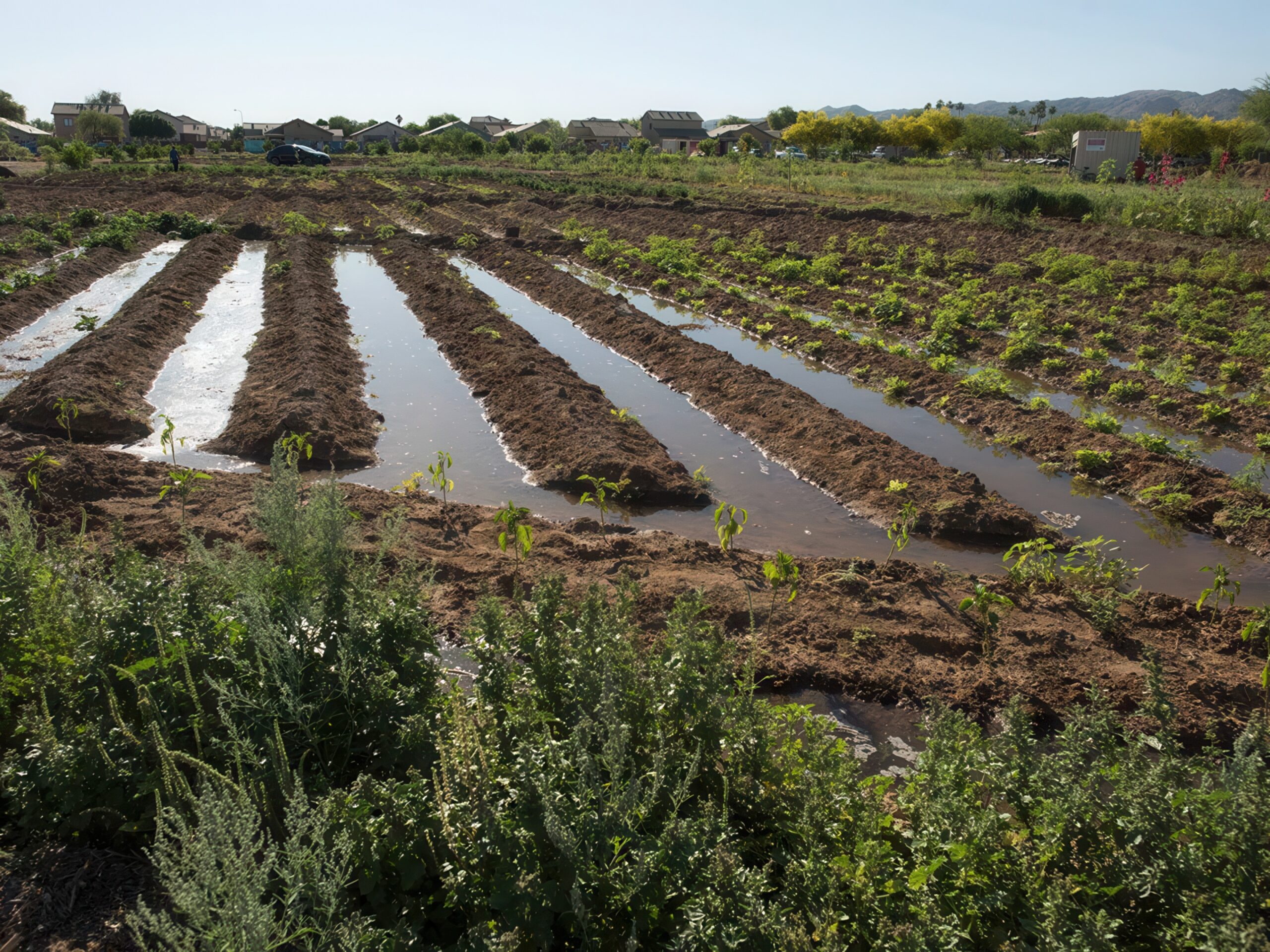
Agriculture relies on clean soil to grow food safely. Vacant brownfields may be ideally situated for urban agriculture, but their contaminated soil poses risks to human health. Common contaminants found in postindustrial brownfield sites include petroleum products, solvents, and heavy metals including arsenic, cadmium, chromium, and lead. Root vegetables and leafy greens can accumulate high amounts of these toxins if planted in contaminated soils, while gardeners and farmers can breathe in contaminated dust or risk skin contact with toxic substances. With these risks in mind, South Phoenix residents hoping to boost urban food production needed to consider soil cleanup as a key concern.
Soil remediation can be a complex and expensive process. Costs vary widely according to the type of pollutants, the specific characteristics of the land affected, and the total area of the land. The first step of remediation is a site assessment, which can determine the level of remediation needed to make the soil safe for food production. These assessments alone can cost between $1,000 and $15,000 depending on the size and complexity of the site. After assessment, site cleanup specialists employ one or more techniques to reduce contact with or the amount of soil contaminants such as capping contaminated soil with an impermeable barrier and building raised beds on top, using soil amendments to stabilize contaminants, or removing all contaminated soil and replacing it with clean soil. Private owners are often concerned by the cost and liability of remediation, while local governments that own brownfields may struggle to access competitive state and federal funding sources for cleanup.
The Policy Solution
The City of Phoenix applied for an EPA Brownfields Assessment Grant to fund site assessment and cleanup planning on privately owned brownfields in South Phoenix.
Acting on the Community Action Plan, the City of Phoenix had two options to address soil contamination and reclaim land for urban agriculture: 1) to exercise municipal redevelopment authority granted by the state legislature to target privately owned brownfields, or 2) to apply for state or federal funding to incentivize brownfields recycling with the help of nonprofit organizations and willing private parties. The city chose the latter.
In the past, environmental initiatives were often met with pushback from the Arizona state legislature. For example, in 2015, the state legislature passed legislation that prohibited local government bans on plastic bags. The state also restricted city initiatives to conduct energy benchmarking. Given this political landscape, the City of Phoenix may have considered it infeasible to impose brownfields cleanup policy using municipal authority. Instead, the city’s Office of Environmental Programs (OEP) chose to offer incentives to private sector landowners for remediation and redevelopment and received approval from Phoenix City Council to apply for federal funding. In 2017, the city received a $400,000 community-wide EPA Brownfields Assessment Grant, a one-time grant for site assessment and cleanup planning for “Brownfields to Healthfields” projects. The grant opened the door to various food production projects that would serve the South Phoenix region.
The Policy Development Process
The City of Phoenix OEP Programs staff met with urban food system stakeholders to brainstorm opportunities to transform unused land into food access sites.
The City of Phoenix initially started its Brownfields Land Recycling Program in 1998 with a grant from the EPA. Since that time, it has restored more than 322 acres of previously contaminated lands for private use and redeveloped more than 30 sites for public use. In 2015, the Phoenix City Council adopted the city’s general plan, which included a goal to “make healthy food available to all Phoenix residents.” Then, in 2016, the Council’s 2050 Environmental Sustainability Goals included a Local Food System Goal to build a “thriving local food system.” The OEP’s 2017 application for an EPA Brownfields Assessment Grant built on a successful existing program and helped the city work toward its strategic planning priorities.
In its Brownfields Land Recycling Program, the OEP has two guiding principles: 1) to assist city departments in the redevelopment of contaminated sites for public use, and 2) to help the private sector redevelop sites that would benefit the community by reducing exposure to hazards, creating jobs and services, and revitalizing neighborhoods. Using EPA funding, the city’s Environmental Programs Manager Rosanne Albright and other OEP staff conducted an inventory of potential redevelopment sites in South and West Phoenix. The OEP had a series of conversations with urban farmers along with contamination experts at the EPA and the University of Arizona that helped them identify properties that would be well-suited for urban agriculture. Farmers were particularly interested in smaller sites that were typically less than 10 acres or so.
Since the EPA grant covered only assessment and planning, OEP staff met with the Arizona Department of Environmental Quality (DEQ) to discuss options for state funding to support cleanup. The DEQ agreed to fund up to $100,000 annually. Experts at the EPA and the University of Arizona advised OEP to focus their efforts on sites with lower levels of contamination (generally sites that had experienced minimal illegal dumping, minor soil staining, or light industrial or commercial uses) to maximize the impact of state and federal grants and to keep cleanup costs low for private landowners.
Due to its track record of success in brownfields recycling, the OEP is often approached by private landowners or nonprofit real estate developers seeking to access public funds to clean up contaminated properties. There is currently no formal application process for developing and funding this type of project; each one is assessed on an ad hoc basis, with OEP serving to coordinate state and federal grant funding as well as collaborations between potential partners. The OEP has also built an extensive network of farmers and food organizations and is able to connect landowners aiming to clean up their land with farmers looking for land to farm. While OEP staff conducted an inventory of potentially suitable redevelopment sites in South Phoenix as part of their grant from the EPA, they did not have the ability to leverage direct ownership of abandoned property (as might be the case in other cities), since taxation and foreclosure falls under the purview of Maricopa County rather than the city.
The Office of Environmental Programs has built an extensive network of farmers and food organizations and is able to connect landowners aiming to clean up their land with farmers looking for land to farm.
The Policy Impact
By leveraging federal and state funds and collaborating with South Phoenix residents, the City of Phoenix has transformed underutilized community assets into urban agriculture hubs.
With EPA Brownfields funding, the OEP supported a project known as the Pueblo Viejo Fields Project—a collaboration by the landowning Ruiz family, the nonprofit Green on Purpose, who wanted to open a food distribution center, and the nonprofit Quincea, that worked to provide vocational education for veterans and adults with developmental disabilities. The Ruiz family’s land had been idle for many years and had accumulated trash and other debris. The Ruiz family developed a charter school on the neighboring lot and envisioned a garden and aquaculture demonstration site for students but had not taken steps to implement the idea. The partnership of OEP, Green on Purpose, and the Ruiz family was an informal one, and the Ruiz family maintained ownership of the land.
Preliminary soil testing on the Ruiz’s land revealed arsenic and lead contamination. The OEP contracted to remove soil from the site and build raised beds with new soil. Ninety-six fruit trees were also planted in new soil. The use of an adjacent loading dock and commercial kitchen brought the space together as a multi-faceted “food hub” capable of storing and supplying community members with food. The project was finished and dedicated in 2017, about a year after funding was awarded.
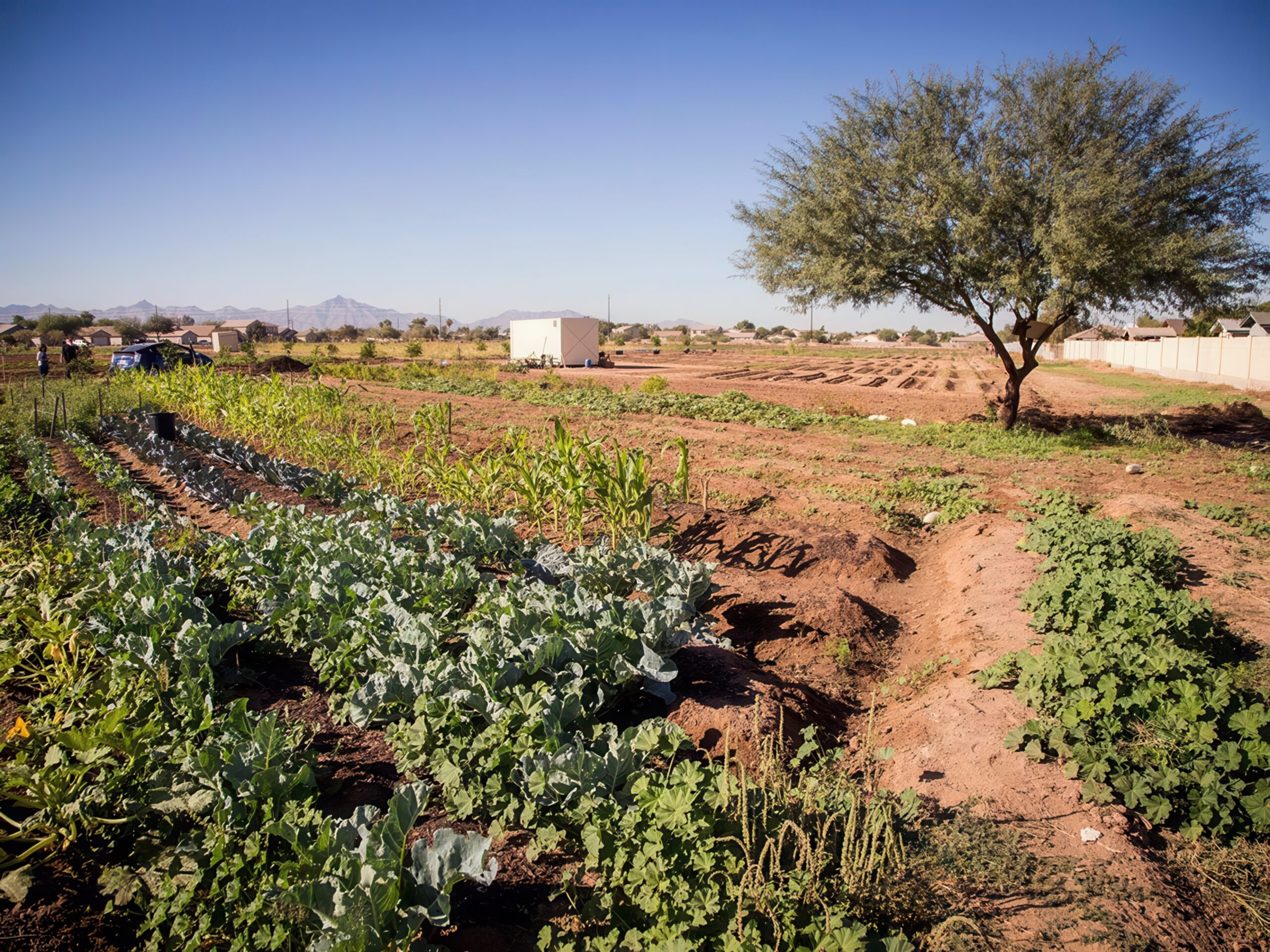
The Pueblo Viejo Fields Project is an example of a successful clean up of a brownfield site for use as an urban garden. However, this project ceased operation in 2019.56 Without continued funding for operational costs, the operators could not continue to run programming as intended. While the physical improvements and removal of contamination are a net gain for the Ruiz family and the surrounding neighborhood, the space is no longer operational as an urban agriculture space. Because of the informal nature of the partnership and the city’s lack of authority to restrict the use of private property, the partners were able to withdraw without any consequences.
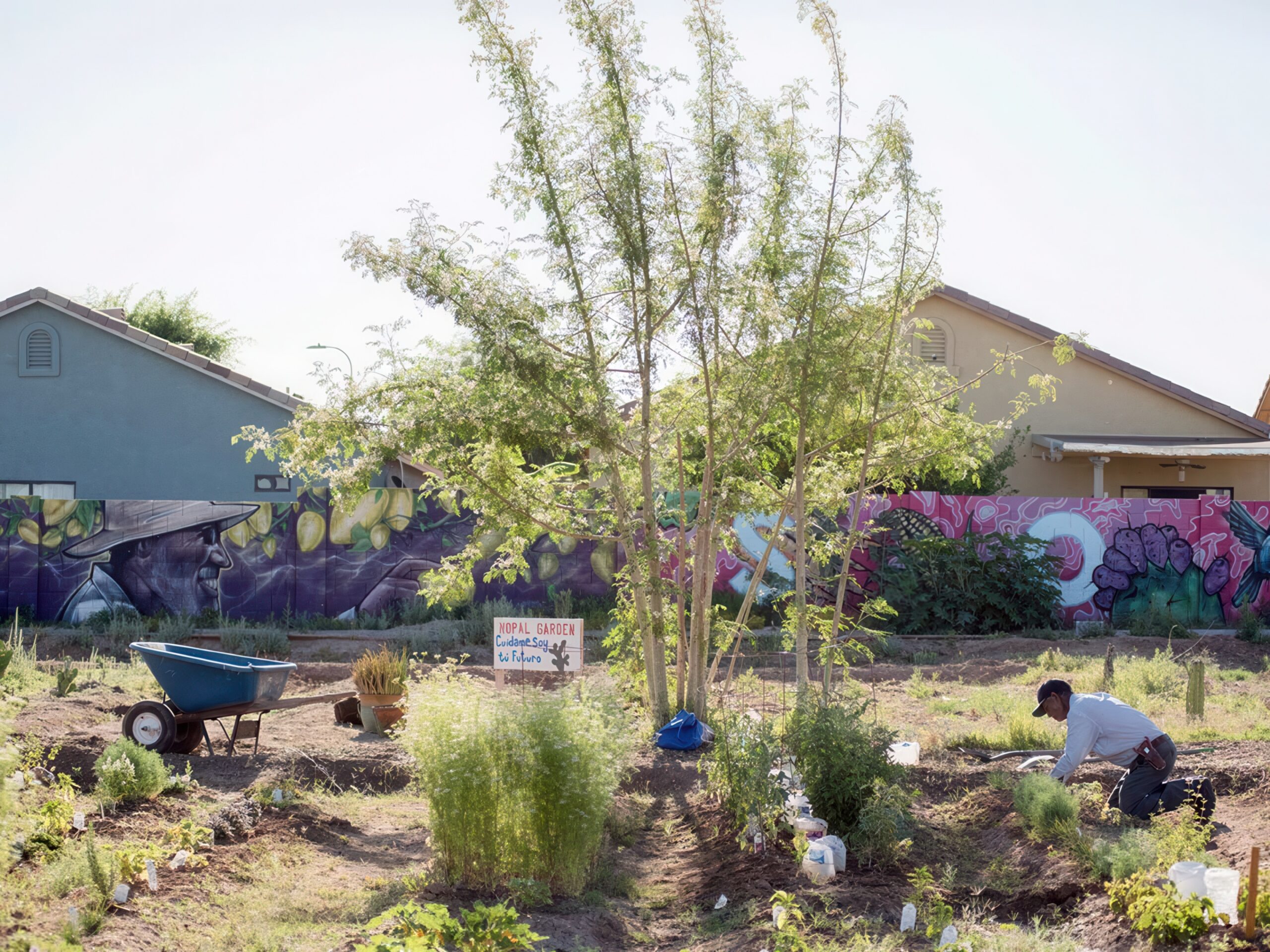
The OEP used the EPA grant to support another project known as Spaces of Opportunity. For this project, the OEP teamed up with five well-established environmental, education, and food systems organizations—Tiger Mountain Foundation, the Desert Botanical Garden, Orchard Community Learning Center, the Roosevelt School District, and Unlimited Potential—along with a group of neighbors, to identify, clean up, and transform a 19-acre lot into a site that now houses community and commercial growing space alongside a farmers market. Again, OEP served as a network hub to bring potential collaborators together and provided the funding for assessment and cleanup of the site.
In 2023, Spaces of Opportunity reorganized as a standalone nonprofit organization and continues to operate. With this new tax-exempt designation, Spaces of Opportunity can more easily access funding from state and federal sources, in addition to private donors, to maintain operations. The City of Phoenix continues to invest in brownfields recycling for urban food production. In 2023, Phoenix successfully secured $3,000,000 in municipal bond funds to invest in land cleanup. Among the OEP’s brownfields projects in progress, the Arizona Fresh AgriFood Innovation Center will be a food hub and research center on the 100-acre site of a former landfill. The project broke ground in 2023 and is expected to be completed in phases over approximately 20 years.
Lessons Learned
- An EPA Brownfields Assessment Grant provides an opportunity for city governments to meet their community development goals by improving vacant land and boosting local food production.
- City offices can serve as a connector among city departments, organizations, farmers, and residents looking for start-up funding or brownfield remediation strategies.
- Contracts, MOUs, and other formal agreements can help clarify roles in partnerships revolving around urban agriculture on privately-owned land. Partnering with established nonprofit organizations with aligned missions and a track record of successful program management can help municipally funded brownfields programs result in long-lasting urban agriculture projects.
Acknowledgments
This resource was produced by the Center for Agriculture and Food Systems (CAFS) at Vermont Law and Graduate School (VLGS). It was authored by Grace McGuire JD’27 and Liz Turner, with editorial and production support from Laurie Beyranevand JD’03, Lindsey Connolly MELP’11, Lihlani Nelson, and Austin Price; and was designed by Jeff Wainer of Vermont Design Collective. This resource was reviewed by project advisory group members Anita Adalja (Ashokra Farm/ Not Our Farm), Andrea Clark, Nelson Hawkins (We Grow Farms/Ujamaa Farmer Collective), Christian Kanlian (The Urban Assembly School for Green Careers), Amanda Karls (Foodvocate LLC), Mina Seck (SPROUT), Molly Stanek (The Aquaponics Association), and Latha Swamy (City of New Haven); external reviewer Rosanne Albright (City of Phoenix Office of Environmental Programs); and Markus Holliday from the USDA Office of Urban Agriculture and Innovative Production. The findings and perspectives expressed in this resource are solely attributable to the authors.
This case study is part of a series of resources on legal topics related to urban agriculture and innovative production. It was produced with support from the Office of Urban Agriculture and Innovative Production at the U.S. Department of Agriculture. View the whole project at cafs.vermontlaw.edu/projects/urban-agriculture-and-innovative-production.
Suggested Citation
Ctr. for Agric. & Food Sys., Cleaning Up Contaminated Soil: How the City of Phoenix Used State and Federal Brownfields Funding to Transform Vacant Lots into Land for Urban Agriculture (2026), https://cafs.vermontlaw.edu/resource-library/cleaning-up-contaminated-soil.